Understanding the updated global poverty lines: What it means for communities we serve
In June 2025, the World Bank updated its global poverty lines to better reflect the rising costs of basic goods and services faced by people living in poverty. The extreme poverty line increased from US$2.15 to US$3.00 per day, while the moderate poverty line rose from US$3.65 to US$4.20.
These changes mean that more people are now classified as living in extreme poverty — an increase from 713 million to 838 million people globally. However, despite this rise, the number of people living under the moderate poverty line of $4.20 a day has actually fallen by 180 million, thanks largely to significant progress driven by countries like India.
 With the help of a small loan from our partner TLM in Indonesia, Yulianti runs a successful weaving business
Updated data shows that financial inclusion is impactful, but there’s still more work to do
India alone has lifted nearly 270 million people out of extreme poverty since 2011, driven by social inclusion policies, affordable housing programs, clean cooking fuel initiatives, financial inclusion, and improved healthcare access. Yet, India still has the highest number of people living in extreme poverty — over 75 million — and 343 million people live below the $4.20 moderate poverty line, roughly one in four people in India, and more than 12 times the total population of Australia.
Similarly, Indonesia shows promising improvements, with 19.9% of its population (56 million people) now living under the $4.20 line and 5.4% (15.2 million) in extreme poverty.
At Opportunity International Australia, we recognise that these global figures only tell part of the story.
“Poverty is not just about low incomes,” says Mark Daniels, Head of Microfinance and Innovation at Opportunity International Australia. “It is about irregular and uncertain incomes. It’s also about lack of access to essential services like healthcare, sanitation, education and proper shelter and electricity."
That’s why our work goes beyond small loans. We partner with local organisations who understand the needs of communities and can provide support where it’s needed most.” - Mark Daniels
Opportunity works alongside local partners including Cashpor, who provide financial services in Bihar and Jharkhand states, and TLM who operate in rural and regional parts of Indonesia, to reach communities where poverty is most widespread and financial services are often inaccessible, particularly for women and people with disability.
Led by local partners, our microfinance programs empower women and families to start or grow businesses, improving their incomes and quality of life. An independent study which Opportunity partners were part of shows that 91% of microfinance clients report increased income and 94% had an improved quality of life after receiving small loans and inclusive financial services.
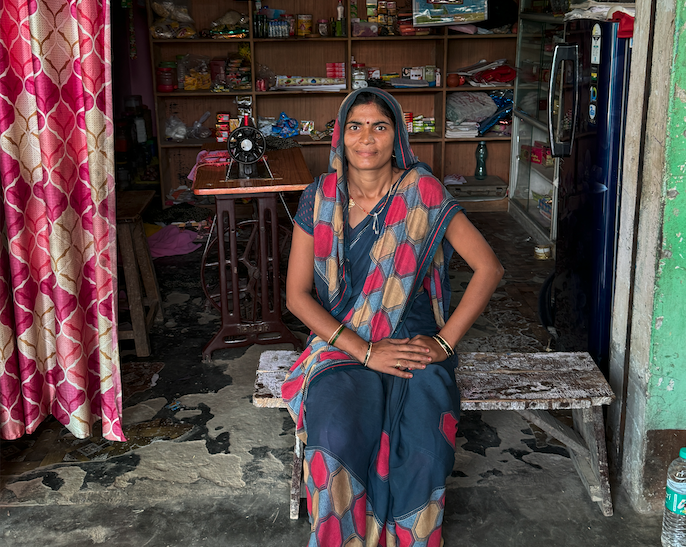 Rani is a mother of three who accessed a small loan from one of our local partners, Cashpor
As global economies grow, more communities are being left behind
While the new poverty lines highlight the growing cost pressures on vulnerable populations, they also reinforce the urgent need for targeted support.
“Economic growth has been uneven, often benefiting wealthier groups more than those living in poverty,” says Daniels. “Regional disparities within countries like India and Indonesia remain stark, especially between urban and rural areas.”
This means there are still many pockets of unmet need where Opportunity’s innovative financial inclusion, health and education programs, as well as gender, disability and social inclusion, can make a real difference.
The updated data reminds us that poverty reduction is possible but requires sustained effort. Despite remarkable progress, it will take decades at the current pace to eliminate extreme poverty worldwide. Opportunity remains committed to walking alongside families on their pathway out of poverty, providing the tools, resources, and partnerships needed to create lasting change.
Last year we supported over 7.5 million families across Asia with inclusive finance, education and training. Learn more about the impact of our global programs.